Farra Do Boi (The Festival of the Oxen)
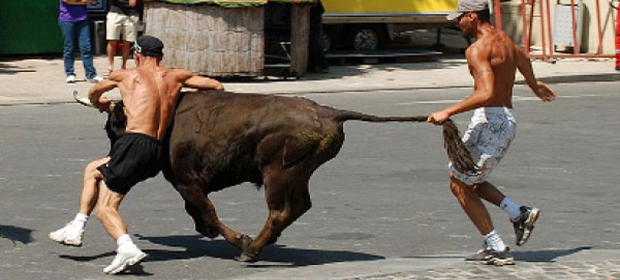
Farra do boi, translated as "Festival of the Oxen" or "Ox Fun Days", involves the torture of several hundreds of oxen each year in more than thirty communities throughout the Brazilian state of Santa Catarina.
Until recently, Farra do Boi occurred primarily during Easter week and on New Year's Day in remote coastal villages. Today some communities hold weekly Farras to "celebrate" weddings, birthdays, soccer games and other special occasions. Prominent businessmen, citizens, cattle breeders, restaurateurs, and politicians often donate the oxen.
The celebration begins when the ox, which is usually roped, is driven out from the pen and chased through the streets by crowds of villagers, some carrying sticks, umbrellas and even knives.
Sometimes the helpless animals are doused with gasoline and set on fire. Sometimes pepper is thrown into their eyes, which are often then gouged out. Sometimes a piece of wood or glass is forcedly inserted into their anus, or they are bathed in hot oil. Usually the participants break the animal's horns and legs and cut off their tales. Oxen may be stabbed or hit as many times as possible, as long as the blows are not fatal, as the ox must survive until the end. This torture may continue for three days or longer. Finally the animal is killed and the meat is divided among the participants to eat.
Some say the ritual is a symbolic reenactment of the Passion of Jesus, with the ox representing Judas. Others believe the animal represents satan, and torturing the devil washes away their sins. But nowadays the festival has no religious connotation. For the people of the little coastal villages, Farra do Boi became just an opportunity to party, and for some a source of extra money by selling drinks and food to the participants.
The festival is illegal in Brazil, but since oxen don't vote and abusers do, the politicians and the local authorities turn a blind eye instead of enforcing the law. This 250 years old ritual continues illegally and is fervently supported by the hundreds of thousands of participants every year.